
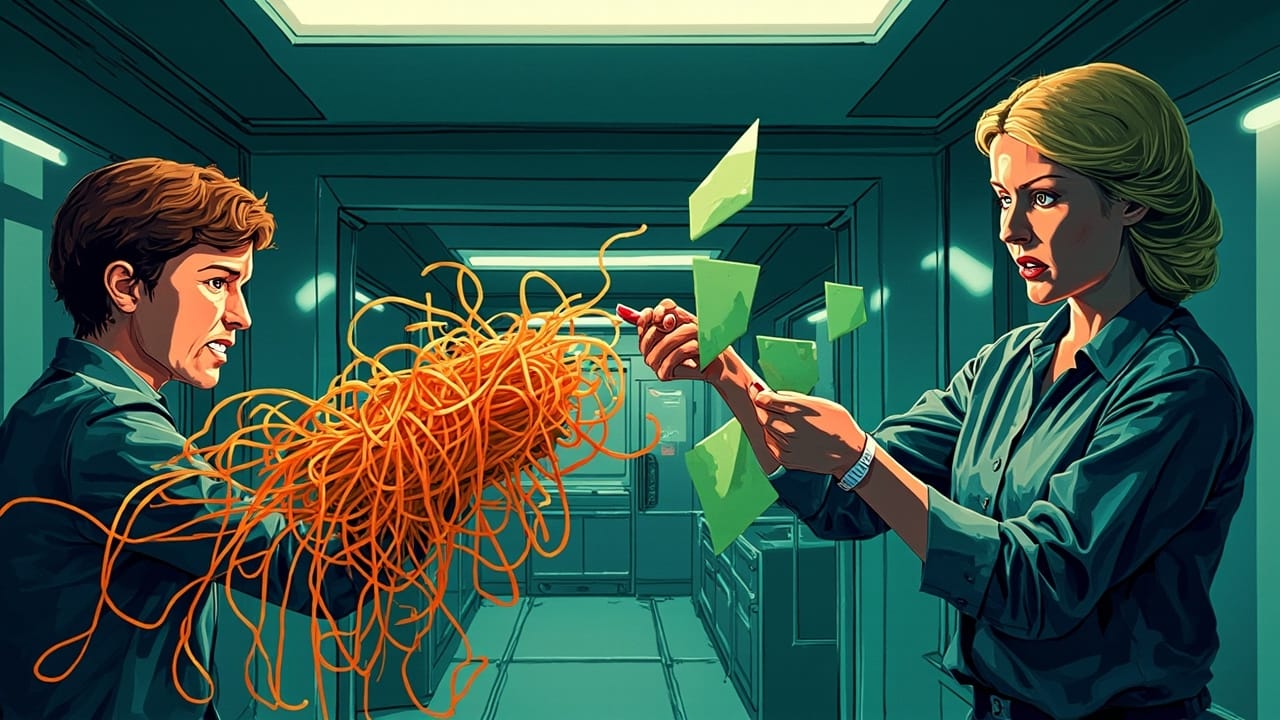
panic moves faster when it comes from the top.
a worried employee can unsettle a room. a panicked leader can make an entire company abandon judgment.
people study the leader for the size of the threat. when every message becomes urgent, every setback becomes a crisis, and every question is answered with visible fear, the team stops evaluating facts. it starts reacting to emotion.
that is how one problem becomes ten.
leadership does not require pretending everything is fine. false calm is another kind of dishonesty. people can usually feel when information is being hidden, and silence gives fear room to invent a worse story.
the job is to absorb panic and return clarity.
start with the facts. what happened? what remains unknown? what is the immediate consequence? what decision must be made now, and what can wait until better information arrives?
separate the danger from the noise.
then control the rhythm. a crisis creates pressure to speak constantly. resist it. communicate at a reliable interval, even when the update is that there is no new answer. people handle uncertainty better when they know when truth will return.
give the team work it can execute. fear grows inside helplessness. a clear owner, next action, and deadline turn anxiety into motion without pretending the outcome is guaranteed.